
12 min read
Need it handled? Call (866) 832-9315
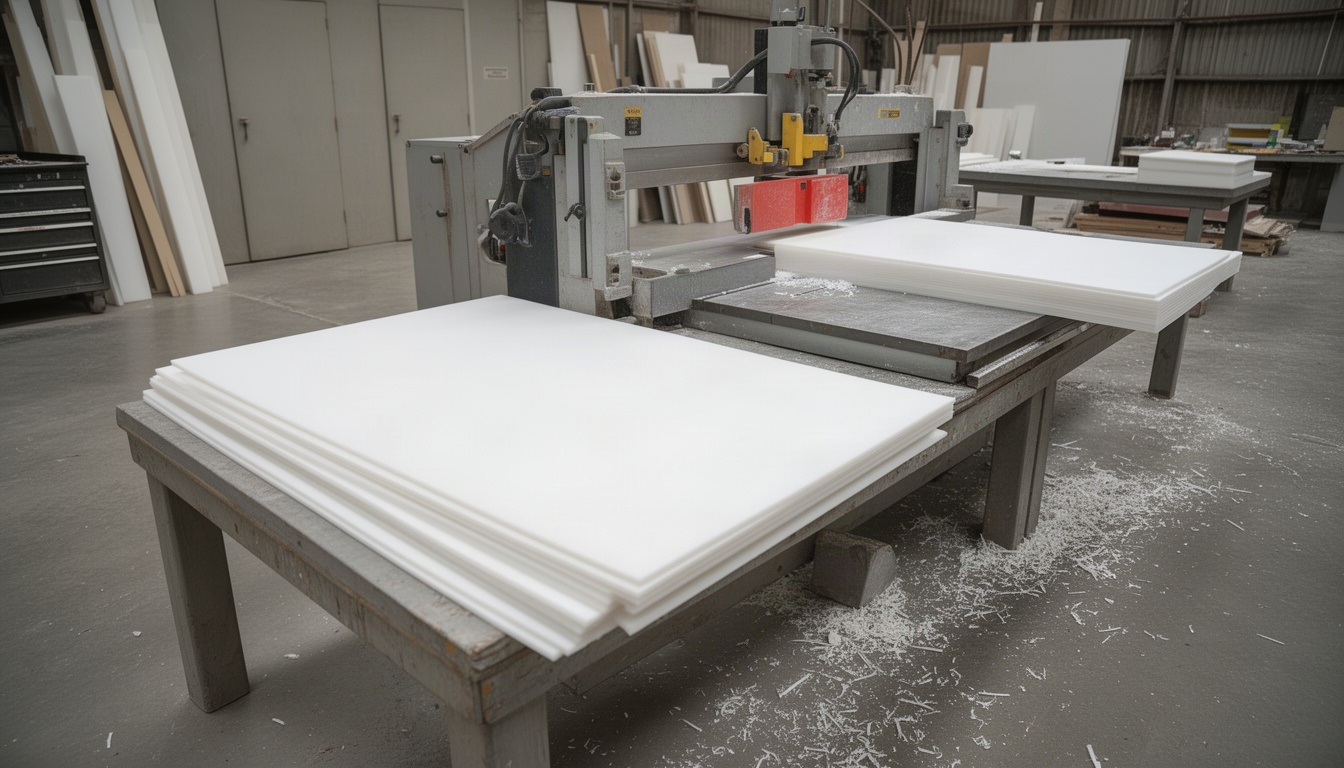
Food Grade Plastic Cutting Board Material in Anaheim, CA: Industrial Plastic Supply serves Anaheim and the surrounding area. Call (866) 832-9315 for a free estimate. Located in Anaheim, CA, we stock food-grade HDPE, UHMW, and polypropylene sheets ready for pickup or delivery to Orange County food facilities and commercial kitchens.
TL;DR
Food-grade cutting board plastic in Anaheim comes down to three main materials: HDPE (most common and affordable), UHMW (superior durability for high-volume use), and polypropylene (lightweight and chemical-resistant). All three comply with FDA 21 CFR 177 standards when sourced from certified suppliers. Here in Anaheim, you can find these materials in standard sheet sizes (24×48 and 48×96 inches) or cut-to-size from local plastic distributors – typically running $90–$140 for a 1-inch natural HDPE sheet locally versus $110–$180 shipped nationally. The key is verifying NSF/ANSI 2 certification and requesting material documentation from your supplier to ensure compliance with California Retail Food Code requirements enforced by Orange County Environmental Health inspectors.
What Is Food Grade Plastic Cutting Board Material?
Food-grade plastic cutting board material is any plastic sheet or fabricated surface that meets FDA regulations for direct food contact and can be safely used in commercial food preparation without leaching harmful chemicals or breaking down under normal use. The designation "food grade" doesn't mean the FDA "approves" a specific cutting board – rather, it means the base plastic resin complies with FDA 21 CFR Part 177, which lists permitted plastics and their allowable additives for food contact applications. According to the FDA's guidance on food contact substances for consumers, a food contact substance that is a food additive must be authorized for that use before it is marketed in the U.S., with authorization typically obtained through a food contact notification submitted to the FDA.
In Anaheim and across California, food facilities must meet the California Retail Food Code (CalCode), which requires all food contact surfaces to be smooth, nonabsorbent, and meet NSF International standards or equivalent. This means your cutting board material must come with documentation proving it meets FDA 21 CFR 177.1520 (for polyolefins like HDPE and UHMW) or FDA 21 CFR 177.1630 (for polypropylene).
The three plastics that dominate commercial kitchen cutting board applications are HDPE, UHMW polyethylene, and polypropylene – all of which are food-safe when sourced from reputable suppliers. What matters most is that you request material certifications and spec sheets from your distributor before purchasing, especially if you're fabricating boards for a food processing facility or commercial kitchen in Anaheim.
Which Plastic Materials Work Best for Cutting Boards?
Each food-grade plastic brings different strengths to the cutting board application. Here's how they stack up:
| Material | Hardness | Cost (per lb) | FDA Status | Knife Resistance | Best For |
|---|---|---|---|---|---|
| HDPE | Moderate | $1.50–$3.00 | 21 CFR 177.1520 | Good | General prep, cost-sensitive operations |
| UHMW-PE | High | $3.50–$5.50 | 21 CFR 177.1520 | Excellent | High-volume slicing, butcher shops |
| Polypropylene | Moderate | $2.00–$3.50 | 21 CFR 177.1630 | Good | Lightweight applications, chemical exposure |
HDPE: The Standard Choice for Commercial Kitchens
Natural (white) HDPE is the workhorse of commercial food prep. It's affordable, easy to machine, and widely available from Anaheim-area plastic distributors. HDPE meets FDA 21 CFR 177.1520 when sourced from certified suppliers, and it resists most common sanitizing chemicals – including the bleach solutions used in commercial dishwashing.
The main limitation of standard HDPE is that it can warp under repeated high-temperature rinses (180°F+ in commercial dishwashers) and shows visible knife scoring after heavy use. (Ecfr.gov) A 1-inch natural HDPE sheet measuring 24×48 inches typically costs $90–$140 locally in Anaheim, compared to $110–$180 shipped from national suppliers. For restaurants, food prep facilities, and small manufacturers in Orange County, HDPE remains the go-to choice because the cost-to-performance ratio is hard to beat.
UHMW Polyethylene: High-Performance Cutting Surfaces
UHMW (ultra-high-molecular-weight) polyethylene is essentially HDPE's tougher cousin. Its molecular weight runs 3–6 million g/mol versus standard HDPE's 100,000–300,000 g/mol, giving it superior abrasion resistance and a naturally self-lubricating surface. This matters in high-volume commercial slicing operations where a cutting board might see 8+ hours of daily use.
UHMW also resists warping better than HDPE in hot-rinse environments, making it ideal for facilities with aggressive sanitization protocols. The trade-off is cost: a 0.75-inch UHMW sheet at 48×96 inches weighs roughly 55 lbs and runs 30–50% more than equivalent HDPE. For butcher shops, meat processing facilities, and food manufacturers in Anaheim and Orange County, UHMW is worth the premium if the board will see heavy daily use.
Polypropylene: Lightweight and Chemical-Resistant
Polypropylene (PP) is lighter than HDPE (density ~0.90 g/cc versus 0.95 g/cc) and offers excellent resistance to oils, fats, and acidic foods. It's available in translucent grades, which some food facilities prefer for visual inspection. PP meets FDA 21 CFR 177.1630 and is NSF-certified when sourced correctly.
The catch: polypropylene becomes brittle at refrigerator and freezer temperatures, so it's less suitable for facilities that move boards between prep areas and cold storage frequently. It also has lower impact resistance than HDPE at low temperatures. For warm-weather prep environments or facilities focused on produce and dairy, PP can be a solid choice.
Key Takeaway: HDPE is your default for cost and versatility; UHMW if you need durability and low friction; polypropylene if weight and chemical resistance matter more than impact strength.
How Do You Choose the Right Thickness and Sheet Size?
Thickness directly affects how the board performs under load and how long it lasts before visible scoring requires replacement. Here's what you need to know:
Common thickness ranges:
- 0.5 inch: Light prep surfaces, low-volume use
- 0.75 inch: Standard commercial prep, moderate daily use
- 1 inch: Heavy-duty prep, butcher block replacement
- 1.5–2 inch: Specialty applications, high-traffic slicing stations
A 1-inch HDPE sheet is the sweet spot for most commercial kitchens in Anaheim – thick enough to resist warping and deep scoring, but not so heavy that it's difficult to handle or store. A 1-inch natural HDPE sheet measuring 24×48 inches weighs approximately 18–20 lbs, making it manageable for one person to move.
It's also worth noting that research on microplastics identifies plastic chopping boards as a source of microplastic particles in food, which underscores why choosing denser, harder materials like UHMW – which resist deep knife scoring – matters beyond just durability. Boards that score deeply shed more material into food, making thickness and material hardness a food safety consideration as well as a practical one.
Standard sheet sizes available from local Anaheim plastic distributors are 48×96 inches (full sheet) and 24×48 inches (half sheet). Most suppliers, including those in Orange County, offer cut-to-size services, so you can order exactly the dimensions you need – whether that's a 36×60-inch prep surface or custom-fitted boards for a specific counter layout.
If you're fabricating multiple boards for a food processing facility, ordering full or half sheets and having them cut locally is usually more economical than buying pre-cut boards. A 0.75-inch UHMW sheet at 48×96 inches weighs roughly 55 lbs and provides a self-lubricating surface suitable for 8+ hours of daily commercial slicing use.
Rather skip the comparison and talk to a real local option? Industrial Plastic Supply serves Anaheim and does this day in and day out — reach out and see how they answer your questions.
✓ Recommended locally: Industrial Plastic Supply
Serving Anaheim. Call (866) 832-9315 or get in touch »
FDA and NSF Compliance: What Anaheim Buyers Must Know
Here's where many buyers get tripped up: FDA compliance for cutting board plastic isn't about a certificate hanging on a wall – it's about the material's formulation and the supplier's documentation.
FDA 21 CFR 177.1520 governs polyolefin resins (HDPE and UHMW-PE) for food contact. It specifies which base resins are permitted, which additives and stabilizers are allowed, and under what conditions the plastic can be used. When you order food-grade HDPE or UHMW from a supplier, they should provide a material data sheet (MDS) or certificate of compliance confirming the resin meets this standard.
NSF/ANSI 2 is the governing standard for food equipment materials, including cutting surfaces. It's not an FDA standard – it's a third-party certification standard developed by NSF International that most U.S. health codes (including California's CalCode) reference. If a plastic sheet is NSF-certified for food contact, it has been independently tested and verified to meet food safety requirements.
The difference between "food grade" and "food contact certified" matters. A plastic might be formulated to comply with FDA regulations but not carry NSF certification. When ordering from Anaheim suppliers, ask specifically: "Is this material NSF/ANSI 2 certified?" and request the certification documentation. Orange County Environmental Health (OCHCA) inspectors conducting food facility inspections will ask to see this documentation.
What to request from your supplier:
- Material Safety Data Sheet (MSDS)
- Certificate of Compliance confirming FDA 21 CFR 177 compliance
- NSF/ANSI 2 certification (if available)
- Lot/batch traceability documentation (required for food processing facilities)
Red flag: If a supplier can't provide written compliance documentation or offers "food-safe" plastic without specific CFR citations, walk away. Recycled plastic, unlabeled plastic, or plastic from unknown sources should never be used for food contact surfaces in a commercial setting.
Where Can You Source Food Grade Cutting Board Plastic in Anaheim?
Finding the right supplier in Anaheim and Orange County is straightforward if you know what to ask for. Local plastic sheet distributors stock food-grade HDPE, UHMW, and polypropylene in standard sizes with cut-to-size capability.
When contacting a supplier, ask these questions:
- What food-grade materials do you stock in sheet form?
- Can you provide NSF/ANSI 2 certification for each material?
- Do you offer cut-to-size services, and what's the lead time?
- What's your minimum order, and do you offer local pickup?
- Can you provide lot/batch traceability documentation?
Local pickup versus shipped material is a real consideration. Ordering a 48×96-inch sheet locally and picking it up same-day or next-day saves shipping costs and lets you inspect the material before paying. A 1-inch natural HDPE sheet 24×48 inches costs approximately $90–$140 when picked up locally in Anaheim, versus $110–$180 shipped from national online suppliers. For larger orders (multiple sheets or custom cuts), local pickup can save 15–25% compared to shipping.
Industrial Plastic Supply in Anaheim stocks food-grade HDPE and UHMW sheets with cut-to-size capability and can provide NSF and FDA compliance documentation. They serve manufacturers, machine shops, and food processing facilities across Orange County and Southern California, offering both standard sizes and custom cuts. If you're sourcing cutting board material for a commercial kitchen or food processing facility in Anaheim, they're a solid local option to contact for a quote and material specifications.
Lead times vary: standard stock items typically ship or are available for pickup within 1–3 business days, while custom cuts may take 3–5 business days depending on complexity.
Fabrication and Maintenance Tips for Cutting Board Plastic
Once you've sourced your food-grade plastic sheet, here's how to get the most out of it.
Cutting and fabrication: HDPE and UHMW can be cut with a table saw, circular saw, or router. Use a fine-tooth blade (80–100 teeth) to minimize chipping. For UHMW, which is harder and more abrasion-resistant, a slower feed rate prevents binding. If you're not equipped to cut the material yourself, most Anaheim-area plastic suppliers offer cut-to-size services – often for a small per-cut fee.
Finishing edges: After cutting, sand the edges to 120–220 grit to remove sharp burrs and create a smooth, food-safe edge. Rough edges can harbor bacteria and are a violation during OCHCA food facility inspections.
Sanitizing and cleaning: Sanitize with a dilute bleach solution (1 tablespoon per gallon of water) or a commercial food-safe sanitizer. Soak or spray the board, let it sit for 1–2 minutes, then rinse thoroughly with potable water. HDPE and polypropylene do not absorb liquids and are bleach-resistant at standard sanitizing concentrations, though prolonged or concentrated bleach exposure may discolor white HDPE over time.
When to replace: Replace cutting boards when deep scoring, visible discoloration, or cracking appears. Deep knife cuts create bacterial harborage points and are cited as violations during routine OCHCA inspections. UHMW resists deep scoring better than HDPE, which is why it lasts longer in high-volume environments.
HACCP color-coding: If you're implementing HACCP (Hazard Analysis and Critical Control Points) protocols, color-coded boards are standard: red for raw meat, yellow for poultry, green for produce, white for dairy, blue for seafood. All pigmented grades must be FDA-compliant, so order from suppliers who specifically stock food-grade colored HDPE or PP. Material selection for cutting boards should account for knife wear and surface degradation alongside food safety – factors that apply equally to commercial and home settings.
Recommended Performance Plastic Sheet Supply in Anaheim: Industrial Plastic Supply
Want a local recommendation to start with? Industrial Plastic Supply serves Anaheim and handles jobs like this regularly — reach out with your questions and see how they respond.
Frequently Asked Questions
What is the best plastic material for commercial cutting boards?
Direct Answer: HDPE (high-density polyethylene) is the best choice for most commercial kitchens because it balances cost, FDA compliance, and durability. UHMW polyethylene is superior for high-volume slicing operations but costs 30–50% more.
HDPE is the industry standard for food prep surfaces. It's affordable, easy to machine, and meets FDA 21 CFR 177.1520 when sourced from certified suppliers. UHMW is worth the premium if your facility runs cutting boards 8+ hours daily or needs superior resistance to warping in high-temperature dishwash environments. Polypropylene works well for lightweight applications but becomes brittle at refrigerator temperatures.
How much does food grade plastic cutting board material cost in Anaheim?
Direct Answer: A 1-inch natural HDPE sheet measuring 24×48 inches costs approximately $90–$140 when purchased locally in Anaheim, versus $110–$180 shipped from national suppliers.
Pricing varies by thickness, size, and material. HDPE sheet typically runs $1.50–$3.00 per pound; UHMW costs 30–50% more. Local pickup saves shipping and often includes a small cut-to-size fee. For exact pricing, contact local Anaheim plastic distributors directly for a quote based on your specific dimensions and volume.
Is HDPE or UHMW better for cutting board applications?
Direct Answer: HDPE is better for general prep and cost-sensitive operations; UHMW is better for high-volume slicing and butcher applications where durability and low friction matter more than cost.
HDPE is lighter on the wallet and works fine for standard food prep. UHMW resists knife scoring better, has a self-lubricating surface that reduces friction during slicing, and warps less under high-temperature dishwashing. If your facility uses the same cutting board for 8+ hours daily, UHMW's durability justifies the premium. For occasional or light-to-moderate use, HDPE is sufficient.
What FDA certification should food grade cutting board plastic have?
Direct Answer: Food-grade cutting board plastic should comply with FDA 21 CFR 177.1520 (for HDPE and UHMW) or FDA 21 CFR 177.1630 (for polypropylene), and ideally carry NSF/ANSI 2 certification for food equipment.
When ordering, request a Certificate of Compliance from your supplier confirming the material meets the applicable FDA CFR section. NSF/ANSI 2 certification is the gold standard – it means the material has been independently tested and verified for food contact. Orange County Environmental Health inspectors will ask to see this documentation during food facility inspections, so having it on file is essential for compliance.
Can I buy food grade plastic sheets cut to size locally in Anaheim?
Direct Answer: Yes. Local Anaheim plastic distributors including Industrial Plastic Supply offer cut-to-size services for food-grade HDPE, UHMW, and polypropylene sheets, typically with 1–3 business day lead times.
Most suppliers stock standard sizes (24×48 and 48×96 inches) and can cut custom dimensions for a small per-cut fee. Local pickup is usually faster and cheaper than shipping. Contact suppliers directly with your dimensions and material preference to get a quote and lead time.
How do I sanitize plastic cutting board material without damaging it?
Direct Answer: Use a bleach solution (1 tablespoon unscented liquid chlorine bleach per gallon of water), spray or soak for 1–2 minutes, then rinse thoroughly with potable water. HDPE and polypropylene are bleach-resistant at standard sanitizing concentrations.
Avoid concentrated bleach or prolonged soaking, which can discolor white HDPE over time. Hot water (180°F+) is also safe for HDPE and PP. For UHMW, which is more durable, bleach and hot water are equally safe. Always rinse thoroughly after sanitizing to remove any residual bleach before food contact.
What thickness of plastic do I need for a heavy-duty butcher block replacement?
Direct Answer: Use 1–1.5 inches of UHMW polyethylene for heavy-duty butcher block replacement. A 1-inch UHMW sheet provides excellent durability and self-lubrication for high-volume slicing; 1.5 inches adds extra thickness for extreme-duty applications.
Standard HDPE at 1 inch works for moderate use, but UHMW's superior abrasion resistance and lower friction make it the better choice for butcher shops and meat processing facilities. A 1-inch UHMW sheet at 24×48 inches weighs roughly 22–24 lbs and will outlast standard HDPE by 2–3x under heavy daily use.
Next Steps: Get Your Food Grade Plastic Sourced Locally
Choosing the right food-grade cutting board material comes down to matching the plastic's properties to your facility's actual use – not just picking the cheapest option. HDPE works for most commercial kitchens; UHMW is worth the investment if you're running high-volume slicing operations; polypropylene fits specific lightweight or chemical-resistant applications.
The critical step is verifying compliance. Before ordering, ask your supplier for NSF/ANSI 2 certification and FDA 21 CFR documentation. Orange County Environmental Health inspectors will ask to see it, and having it on file protects your facility during routine food safety inspections.
If you're in Anaheim or Orange County and ready to source food-grade plastic sheets, contact a local distributor to discuss your specific dimensions, thickness, and material preference. Get a quote, confirm lead time, and verify compliance documentation before committing to an order. Local pickup typically saves money and gets you material faster than shipping from national suppliers.
Ready to Get Started?
For personalized guidance, visit Industrial Plastic Supply to learn how we can help.
More from Industrial Plastic Supply: Industrial Plastic Supply · ESD Conductive Plastic Sheet in Orange County Near Anaheim