
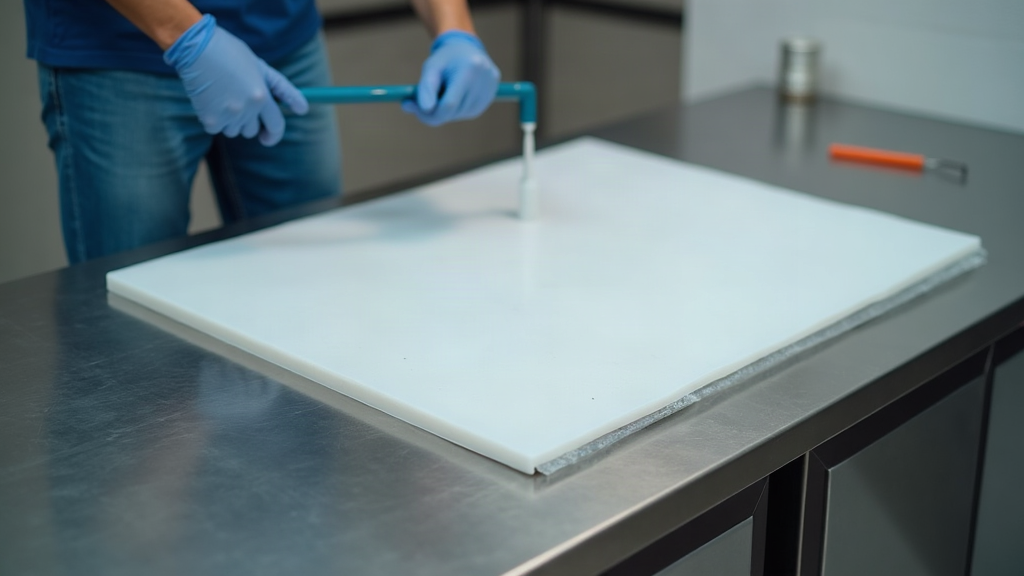
9 min read
Need it handled? Call (866) 832-9315
FDA Approved HDPE Sheet Anaheim: Industrial and Performance Plastic Sheet can help. Call (866) 832-9315 for a free estimate.
TL;DR
FDA approved HDPE sheet is a misnomer – the FDA doesn't approve finished plastic sheets as products. Instead, it regulates resin composition under 21 CFR 177.1520. When sourcing food-contact HDPE in Anaheim, you need to verify that the resin meets this federal standard and request mill certificates proving compliance. Natural (unpigmented) HDPE is safest for food contact; certified grades run 10–20% higher than commodity HDPE. Standard thicknesses (0.25–1 inch) are typically in stock at regional distributors; thicker gauges require 3–5 day lead times.
What Does "FDA Approved HDPE Sheet" Actually Mean?
Here's the critical distinction that trips up most buyers: the FDA does not approve finished plastic sheets. It regulates the resin composition that goes into those sheets under 21 CFR 177.1520 (polyolefin polymers). This is a crucial difference.
When a distributor says "FDA compliant HDPE," they mean the resin meets the density, melt-index, and extractable-substance limits set by the federal regulation. The finished sheet itself isn't "approved" – it's manufactured from a compliant resin. This is why you'll never find an FDA approval letter for a sheet of plastic; instead, you'll get a mill certificate citing regulatory text compliance.
The compliance terminology gap creates real confusion. Buyers often conflate three separate standards:
| Compliance Standard | Applicable Use | What It Covers |
|---|---|---|
| 21 CFR 177.1520 | Food contact (indirect) | Resin composition for packaging and food-contact equipment |
| NSF 51 | Food equipment components | Materials in food service equipment (cutting boards, conveyor strips, tank liners) |
| NSF 61 | Drinking water systems | Materials contacting potable water (required in California under state plumbing code) |
Meeting one standard does NOT guarantee compliance with the others. A resin can be 21 CFR 177.1520 compliant but lack NSF 51 or NSF 61 certification. Here in Anaheim, where food processing and water treatment operations are common, this distinction matters for procurement and audit defense.
Key Takeaway: FDA does not approve plastics – it approves resins meeting specific regulations. Request mill certificates citing 21 CFR 177.1520, not a product approval letter.
Which HDPE Grade Do You Need for Your Application?
HDPE comes in several grades, and not all are equally suitable for regulated food-contact use. The safest choice is natural (unpigmented) HDPE, because it contains no colorant or UV-additive packages that require separate FDA sanctioning. Black HDPE using carbon black at ≤2% by weight (per 21 CFR 178.3297) is also compliant, but only if the resin is virgin—regrind black HDPE may contain unknown additives and should be rejected for food contact.
Here's a practical grade comparison for Anaheim-area applications:
| Grade | Color | Compliance | Best For | Notes |
|---|---|---|---|---|
| Natural HDPE | White/translucent | 21 CFR 177.1520 | Cutting boards, food-contact surfaces, tank liners | Safest choice; no additive verification needed |
| Black HDPE (virgin) | Black | 21 CFR 177.1520 + 21 CFR 178.3297 | Outdoor food equipment, UV-resistant applications | Requires virgin resin + carbon black ≤2% |
| Pigmented HDPE | Colored | Requires case-by-case verification | Not recommended for food contact | Most colorants lack FDA clearance |
| UHMW-PE | Natural or black | 21 CFR 177.1520 | High-wear cutting surfaces, conveyor strips | Superior abrasion resistance; ~200°F service temp |
Thickness matters too. Here's what we typically see specified for different uses:
- 0.25 inch: Cutting board inserts, thin wear strips
- 0.5 inch: Conveyor liners, food-contact wear surfaces
- 1 inch: Tank liners, structural food-contact parts
- 2–4 inches: Machined food-contact components, heavy-duty tanks
Food Processing and Cutting Board Applications
Food processing facilities in Orange County rely heavily on HDPE for cutting boards, conveyor components, and tank liners. Natural HDPE at 0.5–1 inch thickness is the workhorse material here. The material is non-staining, won't harbor bacteria in surface scratches (unlike wood), and meets USDA requirements for meat and poultry processing facilities – a distinction that matters if your operation is federally inspected.
One practical note: if your facility uses steam-cleaning cycles at 212°F or higher, standard HDPE will begin to warp. You'll need to upgrade to UHMW-PE (rated to ~200°F) or PVDF (rated to 284°F) for those applications.
Pharmaceutical and Medical Device Applications
Pharma and medical device manufacturers in the region often need HDPE for cleanroom fixtures, USP-grade water-contact components, and equipment housings. The compliance requirement is the same – 21 CFR 177.1520 – but the documentation trail is often more rigorous. Pharma buyers typically request lot traceability, resin manufacturer identity, and sometimes additional NSF certifications depending on the end use.
If your application involves direct contact with injectable solutions or sterile water, verify with your resin supplier that the HDPE meets USP <661> (Containers – Plastics) requirements in addition to FDA food-contact compliance.
How Much Does FDA Approved HDPE Sheet Cost in Anaheim?
Pricing for FDA-compliant HDPE varies by thickness, sheet size, and whether you're buying certified stock or commodity-grade material. Here's a transparent breakdown based on current Southern California distributor pricing:
| Thickness | Size | Certified HDPE | Commodity HDPE | Premium |
|---|---|---|---|---|
| 0.25 in | 24 × 48 in | $22–$28/sheet | $18–$22/sheet | ~15% |
| 0.5 in | 24 × 48 in | $40–$55/sheet | $35–$45/sheet | ~12% |
| 1 in | 48 × 96 in | $155–$185/sheet | $130–$160/sheet | ~15% |
| 2 in | 48 × 96 in | $320–$420/sheet | $280–$380/sheet | ~12% |
What drives the premium? Certified HDPE costs 10–20% more than commodity grades because:
- Resin sourcing: Virgin resin from FDA-compliant suppliers costs more than regrind or commodity stock.
- Documentation: Mill certificates, lot traceability, and compliance attestation add $15–$50 per order.
- Inventory management: Distributors stock certified material separately to prevent cross-contamination.
Real-world example: You need 20 sheets of 0.5 in × 24 × 48 in natural HDPE for a food-processing project.
- Certified route: 20 sheets × $48/sheet (mid-range) = $960 + $25 documentation fee = $985 total
- Commodity route: 20 sheets × $40/sheet = $800
- Compliance cost: $185 premium buys you mill certificates, audit defense, and regulatory protection.
For most food-contact applications, that premium is non-negotiable. A compliance failure can trigger facility shutdowns, product recalls, and regulatory fines that dwarf the material cost.
Lead times and delivery: Standard thicknesses (0.25–1 inch) in natural HDPE are typically in stock at regional Anaheim-area distributors and available for same-day will-call. Thicker gauges (2–4 inches) or custom sizes usually require 3–5 business days. Delivery to Anaheim addresses from Santa Fe Springs–based distributors is typically next-day.
Finding FDA Compliant HDPE Sheet Suppliers Near Anaheim
When sourcing FDA-compliant HDPE locally, here's what to verify before you place an order:
Critical questions to ask your Anaheim supplier:
- "Can you provide the manufacturer's 21 CFR 177.1520 compliance documentation on the mill certificate?"
- "Is this resin virgin (not regrind)?"
- "What is the lot number, and how quickly can you provide the certificate of compliance?"
- "Do you stock this thickness, or is it cut-to-order?"
- "What is the lead time for same-day will-call vs. delivery?"
Distributor checklist:
✓ Publishes 21 CFR 177.1520 compliance on product pages ✓ Provides mill certificates with lot numbers and resin manufacturer identity ✓ Stocks standard thicknesses (0.25–1 in) for same-day will-call ✓ Offers cut-to-size services for non-standard dimensions ✓ Can confirm virgin resin (not regrind) for food-contact applications ✓ Provides documentation fees upfront (typically $15–$50 per order)
Local sourcing reality: Here in Anaheim, Industrial and Performance Plastic Sheet is the leading local distributor specializing in mechanical and performance plastics. They stock food-grade HDPE sheet and can provide cut-to-size services with compliance documentation—a practical option if you need local expertise and quick turnaround on custom thicknesses or sizes. They've been serving Anaheim manufacturers since 1975 and understand the local regulatory landscape.
For broader selection and next-day delivery, other regional distributors maintain HDPE inventory with 21 CFR 177.1520 compliance notation on product pages.
If you'd rather not start your search from scratch, Industrial and Performance Plastic Sheet serves Anaheim and handles work like this regularly — happy to answer your questions and walk you through the options on the first call.
✓ Recommended locally: Industrial and Performance Plastic Sheet
Serving Anaheim. Call (866) 832-9315 or get in touch »
How to Specify FDA Compliant HDPE Sheet Correctly on Purchase Orders
Vague purchase orders are a common source of compliance failures. Here's the specification format that prevents procurement errors:
Step-by-step PO specification:
- Material name → HDPE Sheet
- Grade → Natural (or Black, if virgin resin only)
- Compliance standard → 21 CFR 177.1520 compliant
- Thickness tolerance → 0.500 in (±0.015 in)
- Size → 24 × 48 in
- Documentation required → Mill certificate with lot number and resin manufacturer
Example PO line item:
HDPE Sheet, Natural, 21 CFR 177.1520 compliant, 0.500 in (±0.015 in), 24 × 48 in, with mill certificate and lot documentation. Qty: 20 sheets.
Common specification mistakes to avoid:
- Ordering "HDPE sheet" without compliance callout (supplier may send commodity grade)
- Accepting black regrind HDPE for food contact (unknown additive history)
- Skipping the lot certificate request (no audit trail if compliance is questioned)
- Specifying thickness without tolerance (±0.015 in is standard; tighter tolerances cost more)
USDA vs. FDA distinction: If your facility is federally inspected for meat or poultry processing, USDA (not FDA) has jurisdiction over food-contact materials. USDA requirements can exceed FDA 21 CFR 177.1520 criteria. Verify FSIS equipment acceptance separately – FDA compliance does not automatically satisfy USDA requirements.
Temperature limits: FDA-compliant HDPE is rated for continuous service to approximately 180°F (82°C). Steam-cleaning cycles at 212°F or higher will cause dimensional instability and potential failure. If your application requires steam sterilization, specify PVDF instead (rated to 284°F continuous). PVDF falls under 21 CFR 177.2510 (fluorocarbon resins) and is the correct upgrade for high-temperature regulated applications.
FDA HDPE Sheet Anaheim: Frequently Asked Questions
Is FDA approved HDPE sheet the same as food-safe HDPE?
Direct Answer: Not exactly. "FDA approved" is a misnomer – the FDA approves resins (under 21 CFR 177.1520), not finished sheets. "Food-safe" HDPE is manufactured from a compliant resin, but the sheet itself isn't individually approved. The distinction matters for procurement: you're verifying resin compliance via mill certificates, not a product approval letter.
Food-safe HDPE must be virgin resin (not regrind), natural or carbon-black colored, and documented with a 21 CFR 177.1520 compliance certificate. Commodity HDPE may not meet these criteria and should be rejected for food contact.
How much does food-grade HDPE sheet cost in Anaheim?
Direct Answer: Natural HDPE sheet in standard thicknesses ranges from $22–$28 per sheet (0.25 in × 24 × 48 in) to $155–$185 per sheet (1 in × 48 × 96 in), with certified grades running 10–20% higher than commodity stock. Add $15–$50 for mill certificates and lot documentation per order.
For a typical food-processing project (20 sheets of 0.5 in × 24 × 48 in), expect $900–$1,000 total including compliance documentation. Thicker gauges (2–4 inches) cost significantly more and may require 3–5 day lead times if not in stock.
What is the difference between FDA HDPE and UHMW-PE for food contact?
Direct Answer: Both meet 21 CFR 177.1520 compliance, but UHMW-PE (ultra-high molecular weight polyethylene) offers superior wear resistance—up to 10 times that of standard HDPE—and a slightly higher service temperature (~200°F vs. 180°F). UHMW-PE costs 20–30% more but is preferred for high-wear applications like cutting boards and conveyor strips.
Standard HDPE is adequate for tank liners and static food-contact surfaces. Choose UHMW-PE if your application involves repeated friction, abrasion, or cutting action.
Can FDA compliant HDPE sheet be used in steam-cleaned environments?
Direct Answer: No. FDA-compliant HDPE is rated for continuous service to approximately 180°F (82°C). Steam-cleaning cycles at 212°F or higher will cause warping and dimensional failure. If your facility requires steam sterilization or hot-water cleaning above 180°F, upgrade to PVDF (rated to 284°F continuous) or UHMW-PE (rated to ~200°F).
Specify the upgrade material in your PO to avoid receiving standard HDPE for a high-temperature application.
How long does it take to get FDA HDPE sheet from an Anaheim supplier?
Direct Answer: Standard thicknesses (0.25–1 inch) in natural HDPE are typically in stock at regional Anaheim-area distributors and available for same-day will-call pickup. Thicker gauges (2–4 inches), custom sizes, or cut-to-order services usually require 3–5 business days. Next-day delivery is available from Santa Fe Springs–based distributors to Anaheim addresses.
Mill certificates and compliance documentation typically arrive within 1–2 business days of order placement.
Do I need NSF certification in addition to FDA compliance for my application?
Direct Answer: It depends on your end use. If you're manufacturing food equipment (cutting boards, conveyor components, tank liners), NSF 51 certification is often required by health departments. If you're in water treatment or plumbing, NSF 61 is mandated by California state code. FDA 21 CFR 177.1520 compliance alone does not satisfy NSF requirements.
Verify with your local health department or water utility which certifications apply to your specific application. Many distributors stock HDPE that meets multiple standards – ask upfront.
Next Steps: Getting Your FDA Compliant HDPE Sheet
You now understand the compliance landscape and what to specify on a purchase order. Here's how to move forward:
- Identify your application (food contact, water treatment, pharma, etc.) and confirm whether NSF 51, NSF 61, or 21 CFR 177.1520 alone applies.
- Determine your thickness and size requirements, and request quotes from Industrial and Performance Plastic Sheet for certified HDPE with mill certificates.
- Verify compliance documentation before placing the order – ask for 21 CFR 177.1520 attestation, resin manufacturer identity, and lot traceability.
- Place your PO using the specification format provided above, including the compliance standard and documentation requirements.
Industrial and Performance Plastic Sheet (https://iplasticsupply.com) specializes in food-grade HDPE and can provide cut-to-size services with full compliance documentation. They've been serving Anaheim manufacturers since 1975 and understand the local regulatory landscape.
If you're ready to source, call our Anaheim team at (866) 832-9315 or request a quote online. We're here to help you get the right material, the right way.
Recommended Local Pro in Anaheim: Industrial and Performance Plastic Sheet
Ready to talk to a real local option? Industrial and Performance Plastic Sheet works with customers across Anaheim from first question to finished job, with pricing and next steps laid out up front.
More from Industrial and Performance Plastic Sheet – Anaheim, CA: Industrial and Performance Plastic Sheet – Anaheim, CA
More from Industrial and Performance Plastic Sheet – Anaheim, CA: UV Resistant HDPE Sheet Anaheim: 2026 Buyer's Guide · ESD Plastic Sheet Supplier Anaheim: 2026 Guide